Linked List
A linked list stores elements in nodes where each node points to the next (singly linked), and optionally to the previous (doubly linked). Unlike arrays, there is no O(1) random access, but insert/delete at a known node is O(1).
When to use linked lists
| Prefer linked list (conceptually) |
Prefer Python list |
| Frequent insert/delete at iterator position |
Random access by index |
| Implement queue/stack from scratch |
Built-in ops suffice |
| LRU cache / interleaved structure |
Simple sequential storage |
In Python interviews you rarely implement linked lists — but you must understand pointer manipulation for problems like reverse list, merge lists, cycle detection.
Dummy head trick: dummy = Node(0); dummy.next = head removes special cases when the head changes (reverse, merge, remove nth from end). Always state this before coding.
Canonical FAANG problems: reverse (LC 206), merge sorted lists (LC 21), cycle detection (LC 141/142), reorder list (LC 143), palindrome (LC 234). See also Fast and Slow Pointers.
Complexity (n nodes)
| Operation |
Singly |
Doubly |
| Access by index |
O(n) |
O(n) |
| Search |
O(n) |
O(n) |
| Insert/delete at head |
O(1) |
O(1) |
| Insert/delete at tail (with tail ptr) |
O(1) |
O(1) |
| Insert after known node |
O(1) |
O(1) |
| Space |
O(n) |
O(n) |
Singly Linked List
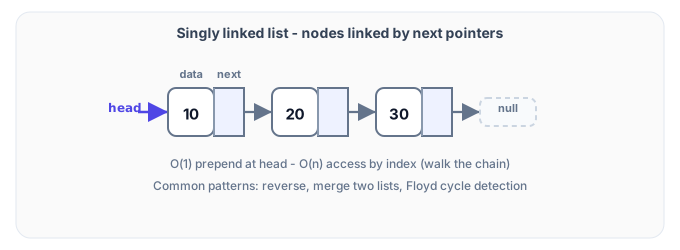
Each node holds data and a next pointer. The head pointer is the only entry point — losing it means losing the list.
| class Node:
def __init__(self, data):
self.data = data
self.next = None
class LinkedList:
def __init__(self):
self.head = None
def append(self, data):
"""Add a new node to the end of the linked list."""
new_node = Node(data)
if not self.head:
self.head = new_node
return
current = self.head
while current.next:
current = current.next
current.next = new_node
def prepend(self, data):
"""Add a new node to the beginning of the linked list."""
new_node = Node(data)
new_node.next = self.head
self.head = new_node
def insert_at_position(self, data, position):
"""Insert a new node at the specified position."""
new_node = Node(data)
if position == 0:
new_node.next = self.head
self.head = new_node
return
current = self.head
index = 0
while current and index < position - 1:
current = current.next
index += 1
if not current:
raise IndexError("Position out of bounds")
new_node.next = current.next
current.next = new_node
def delete(self, data):
"""Delete a node with the specified value."""
if not self.head:
return
if self.head.data == data:
self.head = self.head.next
return
current = self.head
while current.next and current.next.data != data:
current = current.next
if current.next:
current.next = current.next.next
def search(self, data):
"""Search for a node with the specified value and return its index."""
current = self.head
index = 0
while current:
if current.data == data:
return index
current = current.next
index += 1
return -1
def reverse(self):
"""Reverse the linked list."""
prev = None
current = self.head
while current:
next_node = current.next # Store the next node
current.next = prev # Reverse the pointer
prev = current # Move prev to the current node
current = next_node # Move to the next node
self.head = prev # Update the head to the new first node
def display(self):
"""Display the linked list as a sequence of nodes."""
nodes = []
current = self.head
while current:
nodes.append(str(current.data))
current = current.next
print(" -> ".join(nodes))
def size(self):
"""Return the number of nodes in the linked list."""
current = self.head
count = 0
while current:
count += 1
current = current.next
return count
def is_empty(self):
"""Check if the linked list is empty."""
return self.head is None
def get_first(self):
"""Return the first node (head) of the list."""
if self.head:
return self.head.data
return None
def get_last(self):
"""Return the last node (tail) of the list."""
if not self.head:
return None
current = self.head
while current.next:
current = current.next
return current.data
def remove_duplicates(self):
"""Remove duplicate values from the linked list."""
current = self.head
seen = set()
prev = None
while current:
if current.data in seen:
prev.next = current.next # Bypass the duplicate
else:
seen.add(current.data)
prev = current
current = current.next
def clear(self):
"""Clear the entire linked list."""
self.head = None
def get_node_at_index(self, index):
"""Return the node at a given index."""
current = self.head
current_index = 0
while current:
if current_index == index:
return current.data
current = current.next
current_index += 1
return None # Index out of range
def delete_at_index(self, index):
"""Delete a node at the given index."""
if index == 0:
if self.head:
self.head = self.head.next
return
current = self.head
current_index = 0
while current and current.next:
if current_index == index - 1:
current.next = current.next.next
return
current = current.next
current_index += 1
raise IndexError("Index out of bounds")
def to_list(self):
"""Convert the linked list to a Python list."""
result = []
current = self.head
while current:
result.append(current.data)
current = current.next
return result
def sort(self):
"""Sort the linked list."""
if not self.head or not self.head.next:
return
# Implementing merge sort or any sorting algorithm
self.head = self._merge_sort(self.head)
def _merge_sort(self, head):
"""Helper function for merge sort."""
if not head or not head.next:
return head
middle = self._get_middle(head)
next_to_middle = middle.next
middle.next = None
left = self._merge_sort(head)
right = self._merge_sort(next_to_middle)
sorted_list = self._merge(left, right)
return sorted_list
def _get_middle(self, head):
"""Find the middle node of the list."""
if not head:
return head
slow = head
fast = head
while fast.next and fast.next.next:
slow = slow.next
fast = fast.next.next
return slow
def _merge(self, left, right):
"""Merge two sorted linked lists."""
if not left:
return right
if not right:
return left
if left.data <= right.data:
left.next = self._merge(left.next, right)
return left
else:
right.next = self._merge(left, right.next)
return right
# Example usage
ll = LinkedList()
ll.append(10)
ll.append(20)
ll.append(30)
ll.display() # Output: 10 -> 20 -> 30
ll.prepend(5)
ll.display() # Output: 5 -> 10 -> 20 -> 30
ll.insert_at_position(15, 2)
ll.display() # Output: 5 -> 10 -> 15 -> 20 -> 30
ll.insert_at_position(35, 5)
ll.display() # Output: 5 -> 10 -> 15 -> 20 -> 30 -> 35
ll.insert_at_position(0, 0)
ll.display() # Output: 0 -> 5 -> 10 -> 15 -> 20 -> 30 -> 35
# Reverse the linked list
ll.reverse()
ll.display() # Output: 35 -> 30 -> 20 -> 15 -> 10 -> 5 -> 0
# Size of the list
print(f"Size: {ll.size()}") # Output: Size: 7
# Search for an element
print(f"Search 15: {ll.search(15)}") # Output: Search 15: 3
# Remove duplicates (if any)
ll.remove_duplicates()
# Clear the linked list
ll.clear()
ll.display() # Output: (empty list)
# Add some nodes again
ll.append(100)
ll.append(200)
ll.append(300)
ll.display() # Output: 100 -> 200 -> 300
# Convert to Python list
print(f"List as Python list: {ll.to_list()}") # Output: List as Python list: [100, 200, 300]
# Delete at index 1
ll.delete_at_index(1)
ll.display() # Output: 100 -> 300
# Sort the list
ll.sort()
ll.display() # Output: 100 -> 300 (already sorted in this case)
|
Doubly Linked List
| class Node:
def __init__(self, data):
self.data = data
self.next = None
self.prev = None
class DoublyLinkedList:
def __init__(self):
self.head = None
self.tail = None
def append(self, data):
"""Add a new node to the end of the doubly linked list."""
new_node = Node(data)
if not self.head:
self.head = self.tail = new_node
return
self.tail.next = new_node
new_node.prev = self.tail
self.tail = new_node
def prepend(self, data):
"""Add a new node to the beginning of the doubly linked list."""
new_node = Node(data)
if not self.head:
self.head = self.tail = new_node
return
new_node.next = self.head
self.head.prev = new_node
self.head = new_node
def insert_at_position(self, data, position):
"""Insert a new node at the specified position."""
new_node = Node(data)
if position == 0:
self.prepend(data)
return
current = self.head
index = 0
while current and index < position - 1:
current = current.next
index += 1
if not current:
raise IndexError("Position out of bounds")
new_node.next = current.next
if current.next:
current.next.prev = new_node
current.next = new_node
new_node.prev = current
def delete(self, data):
"""Delete a node with the specified value."""
current = self.head
while current:
if current.data == data:
if current.prev:
current.prev.next = current.next
else:
self.head = current.next # If deleting the head
if current.next:
current.next.prev = current.prev
else:
self.tail = current.prev # If deleting the tail
return
current = current.next
def search(self, data):
"""Search for a node with the specified value and return its index."""
current = self.head
index = 0
while current:
if current.data == data:
return index
current = current.next
index += 1
return -1
def reverse(self):
"""Reverse the doubly linked list."""
current = self.head
while current:
current.prev, current.next = current.next, current.prev
current = current.prev
self.head, self.tail = self.tail, self.head
def display(self):
"""Display the doubly linked list as a sequence of nodes."""
nodes = []
current = self.head
while current:
nodes.append(str(current.data))
current = current.next
print(" <-> ".join(nodes))
def size(self):
"""Return the number of nodes in the doubly linked list."""
current = self.head
count = 0
while current:
count += 1
current = current.next
return count
def is_empty(self):
"""Check if the doubly linked list is empty."""
return self.head is None
def get_first(self):
"""Return the first node (head) of the list."""
if self.head:
return self.head.data
return None
def get_last(self):
"""Return the last node (tail) of the list."""
if self.tail:
return self.tail.data
return None
def remove_duplicates(self):
"""Remove duplicate values from the doubly linked list."""
current = self.head
seen = set()
while current:
if current.data in seen:
self.delete(current.data)
else:
seen.add(current.data)
current = current.next
def clear(self):
"""Clear the entire doubly linked list."""
self.head = self.tail = None
def get_node_at_index(self, index):
"""Return the node at a given index."""
current = self.head
current_index = 0
while current:
if current_index == index:
return current.data
current = current.next
current_index += 1
return None # Index out of range
def delete_at_index(self, index):
"""Delete a node at the given index."""
if index == 0:
if self.head:
self.head = self.head.next
if self.head:
self.head.prev = None
return
current = self.head
current_index = 0
while current and current.next:
if current_index == index - 1:
if current.next:
current.next = current.next.next
if current.next:
current.next.prev = current
return
current = current.next
current_index += 1
raise IndexError("Index out of bounds")
def to_list(self):
"""Convert the doubly linked list to a Python list."""
result = []
current = self.head
while current:
result.append(current.data)
current = current.next
return result
def sort(self):
"""Sort the doubly linked list."""
if not self.head or not self.head.next:
return
# Implementing merge sort or any sorting algorithm
self.head = self._merge_sort(self.head)
def _merge_sort(self, head):
"""Helper function for merge sort."""
if not head or not head.next:
return head
middle = self._get_middle(head)
next_to_middle = middle.next
middle.next = None
left = self._merge_sort(head)
right = self._merge_sort(next_to_middle)
sorted_list = self._merge(left, right)
return sorted_list
def _get_middle(self, head):
"""Find the middle node of the list."""
if not head:
return head
slow = head
fast = head
while fast.next and fast.next.next:
slow = slow.next
fast = fast.next.next
return slow
def _merge(self, left, right):
"""Merge two sorted doubly linked lists."""
if not left:
return right
if not right:
return left
if left.data <= right.data:
left.next = self._merge(left.next, right)
if left.next:
left.next.prev = left
return left
else:
right.next = self._merge(left, right.next)
if right.next:
right.next.prev = right
return right
# Example usage
dll = DoublyLinkedList()
dll.append(10)
dll.append(20)
dll.append(30)
dll.display() # Output: 10 <-> 20 <-> 30
dll.prepend(5)
dll.display() # Output: 5 <-> 10 <-> 20 <-> 30
dll.insert_at_position(15, 2)
dll.display() # Output: 5 <-> 10 <-> 15 <-> 20 <-> 30
dll.insert_at_position(35, 5)
dll.display() # Output: 5 <-> 10 <-> 15 <-> 20 <-> 30 <-> 35
dll.insert_at_position(0, 0)
dll.display() # Output: 0 <-> 5 <-> 10 <-> 15 <-> 20 <-> 30 <-> 35
# Reverse the doubly linked list
dll.reverse()
dll.display() # Output: 35 <-> 30 <-> 20 <-> 15 <-> 10 <-> 5 <-> 0
# Size of the list
print(f"Size: {dll.size()}") # Output: Size: 7
# Search for an element
print(f"Search 15: {dll.search(15)}") # Output: Search 15: 3
# Remove duplicates (if any)
dll.remove_duplicates()
# Clear the doubly linked list
dll.clear()
dll.display() # Output: (empty list)
# Add some nodes again
dll.append(100)
dll.append(200)
dll.append(300)
dll.display() # Output: 100 <-> 200 <-> 300
# Convert to Python list
print(f"List as Python list: {dll.to_list()}") # Output: List as Python list: [100, 200, 300]
# Delete at index 1
dll.delete_at_index(1)
dll.display() # Output: 100 <-> 300
# Sort the list
dll.sort()
dll.display() # Output: 100 <-> 300 (already sorted in this case)
|
Circular Linked List
| class Node:
def __init__(self, data):
self.data = data
self.next = None
class CircularLinkedList:
def __init__(self):
self.head = None
def append(self, data):
"""Add a new node to the end of the circular linked list."""
new_node = Node(data)
if not self.head:
self.head = new_node
new_node.next = self.head # Points to itself, forming a circle
return
current = self.head
while current.next != self.head: # Traverse until we find the last node
current = current.next
current.next = new_node
new_node.next = self.head # Complete the circle
def prepend(self, data):
"""Add a new node to the beginning of the circular linked list."""
new_node = Node(data)
if not self.head:
self.head = new_node
new_node.next = self.head # Points to itself
return
new_node.next = self.head
current = self.head
while current.next != self.head: # Traverse until the last node
current = current.next
current.next = new_node # Last node points to the new node
self.head = new_node # Update head
def insert_at_position(self, data, position):
"""Insert a new node at the specified position in the circular linked list."""
new_node = Node(data)
if position == 0:
self.prepend(data)
return
current = self.head
index = 0
while current and index < position - 1:
current = current.next
index += 1
if current == self.head: # Loop back to the start
raise IndexError("Position out of bounds")
if not current:
raise IndexError("Position out of bounds")
new_node.next = current.next
current.next = new_node
def delete(self, data):
"""Delete the node with the specified value."""
if not self.head:
return
current = self.head
prev = None
while True:
if current.data == data:
if prev: # If not the first node
prev.next = current.next
if current == self.head: # If deleting the head node
self.head = current.next
else:
# Deleting the only node (head)
if current.next == self.head:
self.head = None
else:
self.head = current.next
prev = self.head
while prev.next != current: # Update last node's next
prev = prev.next
prev.next = self.head
return
prev = current
current = current.next
if current == self.head: # Loop back to the start
break
def search(self, data):
"""Search for a node with the specified value and return its index."""
if not self.head:
return -1
current = self.head
index = 0
while True:
if current.data == data:
return index
current = current.next
index += 1
if current == self.head: # Loop back to the start
break
return -1
def reverse(self):
"""Reverse the circular linked list."""
if not self.head or self.head.next == self.head:
return # No need to reverse if list is empty or has one node
prev = None
current = self.head
first_node = self.head
while True:
next_node = current.next
current.next = prev
prev = current
current = next_node
if current == first_node: # Loop back to the start
break
self.head.next = prev # Complete the circular reference
self.head = prev # New head is the last node in original list
def display(self):
"""Display the circular linked list."""
if not self.head:
print("List is empty")
return
nodes = []
current = self.head
while True:
nodes.append(str(current.data))
current = current.next
if current == self.head: # Loop back to the start
break
print(" -> ".join(nodes))
def size(self):
"""Return the number of nodes in the circular linked list."""
if not self.head:
return 0
count = 1
current = self.head.next
while current != self.head:
count += 1
current = current.next
return count
def is_empty(self):
"""Check if the circular linked list is empty."""
return self.head is None
def get_first(self):
"""Return the first node (head) of the list."""
if self.head:
return self.head.data
return None
def get_last(self):
"""Return the last node (tail) of the list."""
if not self.head:
return None
current = self.head
while current.next != self.head:
current = current.next
return current.data
def remove_duplicates(self):
"""Remove duplicate values from the circular linked list."""
if not self.head:
return
seen = set()
current = self.head
prev = None
while True:
if current.data in seen:
prev.next = current.next
if current == self.head: # Update head if we deleted the first node
self.head = current.next
else:
seen.add(current.data)
prev = current
current = current.next
if current == self.head: # Loop back to the start
break
def clear(self):
"""Clear the entire circular linked list."""
self.head = None
def get_node_at_index(self, index):
"""Return the node at a given index."""
if not self.head:
return None
current = self.head
current_index = 0
while True:
if current_index == index:
return current.data
current = current.next
current_index += 1
if current == self.head: # Loop back to the start
break
return None # Index out of range
def delete_at_index(self, index):
"""Delete a node at the given index."""
if not self.head:
raise IndexError("Index out of bounds")
if index == 0:
self.delete(self.head.data)
return
current = self.head
prev = None
current_index = 0
while True:
if current_index == index:
if prev:
prev.next = current.next
return
prev = current
current = current.next
current_index += 1
if current == self.head: # Loop back to the start
break
raise IndexError("Index out of bounds")
def to_list(self):
"""Convert the circular linked list to a Python list."""
result = []
if not self.head:
return result
current = self.head
while True:
result.append(current.data)
current = current.next
if current == self.head: # Loop back to the start
break
return result
def sort(self):
"""Sort the circular linked list."""
if not self.head or self.head.next == self.head:
return # No need to sort if list is empty or has one node
nodes = self.to_list()
nodes.sort()
self.clear()
for node in nodes:
self.append(node)
# Example usage
cll = CircularLinkedList()
cll.append(10)
cll.append(20)
cll.append(30)
cll.display() # Output: 10 -> 20 -> 30
cll.prepend(5)
cll.display() # Output: 5 -> 10 -> 20 -> 30
cll.insert_at_position(15, 2)
cll.display() # Output: 5 -> 10 -> 15 -> 20 -> 30
cll.insert_at_position(35, 5)
cll.display() # Output: 5 -> 10 -> 15 -> 20 -> 30 -> 35
cll.insert_at_position(0, 0)
cll.display() # Output: 0 -> 5 -> 10 -> 15 -> 20 -> 30 -> 35
# Reverse the circular linked list
cll.reverse()
cll.display() # Output: 35 -> 30 -> 20 -> 15 -> 10 -> 5 -> 0
# Size of the list
print(f"Size: {cll.size()}") # Output: Size: 7
# Search for an element
print(f"Search 15: {cll.search(15)}") # Output: Search 15: 3
# Remove duplicates (if any)
cll.remove_duplicates()
# Clear the circular linked list
cll.clear()
cll.display() # Output: (empty list)
# Add some nodes again
cll.append(100)
cll.append(200)
cll.append(300)
cll.display() # Output: 100 -> 200 -> 300
# Convert to Python list
print(f"List as Python list: {cll.to_list()}") # Output: List as Python list: [100, 200, 300]
# Delete at index 1
cll.delete_at_index(1)
cll.display() # Output: 100 -> 300
# Sort the list
cll.sort()
cll.display() # Output: 100 -> 300 (already sorted in this case)
|